

What Is an AI Agent, and How Is It Different from a Chatbot?
Why agents can take action, not just answer. The real difference between a chatbot and a system that owns a task end-to-end.
In this article
What is an AI Agent? Full Architecture vs Traditional Chatbots
Full concept explanation and architecture deep-dive. Watch while reading or jump into specific chapters.
1. Passive Chat vs Autonomous Agency
When you talk to a standard chatbot, it is passive and reactive:
- User: "Can you refund order #9182?"
- Chatbot: "To request a refund, please visit codeloset.com/returns and fill out form B-12."
An autonomous AI Agent operates with agency:
- User: "Can you refund order #9182?"
- Agent: Checks Stripe API for transaction status → checks shipping carrier API for delivery return confirmation → issues $84 refund through Stripe API → generates credit note in QuickBooks → emails customer confirmation → replies: "Done! Your refund of $84.00 has been credited to your card ending in 4242."
The difference is night and day. The chatbot created a new task for your team. The agent resolved the business problem completely.
2. The 4 Core Organs of an AI Agent
Every production AI agent engineered at CODELOSET comprises four fundamental subsystems:
- 1The Brain (LLM): Responsible for reasoning, natural language parsing, and decision-making (e.g. Claude 3.5 Sonnet, GPT-4o).
- 2Memory Subsystem: - Short-term Memory: Current conversation thread context. - Long-term Memory: Vector database (Pinecone, Supabase pgvector) storing past interactions, client preferences, and operational logs.
- 3Tool Registry (Function Calling): A set of strict API endpoints the agent can invoke (SendEmail, QueryDatabase, UpdateCRMStage, RunPythonCode).
- 4Planning Engine: Breaks a large ambition ("Audit lead pipeline for stalled deals") into sequential atomic sub-steps with self-correction capabilities.
3. The ReAct Architecture: Reason + Act
How does an agent actually make decisions? The industry standard is the ReAct (Reasoning + Acting) loop:
- Thought: The agent reflects on its objective and current state.
- Action: It selects an available tool and passes parameters (e.g.
lookup_client_id(email='john@example.com')). - Observation: It reads the raw JSON response returned by your server.
- Repeat: It evaluates whether the goal is achieved or if another tool call is necessary.
Never give an agent raw database write access without strict Pydantic/Zod schema validation. The agent proposes the action; your backend verifies safety.
4. Real-World Business Deployments
At CODELOSET, we build autonomous AI employees that eliminate manual operational lag across industries:
- AI Lead Responder: Ingests inbound web inquiries within 45 seconds, verifies company size via Apollo/Clearbit, qualifies budget, and books a calendar slot directly in HubSpot.
- AI Support Specialist: Resolves tier-1 support tickets by diagnosing server error codes, updating user account flags in PostgreSQL, and sending verified resolution notes.
- AI Finance Reconciler: Matches PDF invoice line items against Stripe ledger entries and alerts the CFO on Slack if discrepancy > 0.01%.
5. The Guardrail Rule: Human-in-the-Loop
The most successful enterprise AI deployments are not 100% autonomous — they are 95% automated with intentional human checkpoints.
For sensitive actions (e.g. refunding over $500, sending an email to a Tier-1 enterprise account, or modifying production database records), the agent prepares the payload, presents a preview button to a human manager in Slack, and executes only upon human approval.
Autonomous AI Agents represent the biggest shift in business software since the cloud. Building them with rigorous tools and guardrails turns repetitive work into automated revenue.
Written by Anus Imran
FounderAnus builds autonomous AI agents, enterprise web applications, and production systems at CODELOSET. He breaks down technology and architectures every week on YouTube.
Continue Exploring Technical Insights
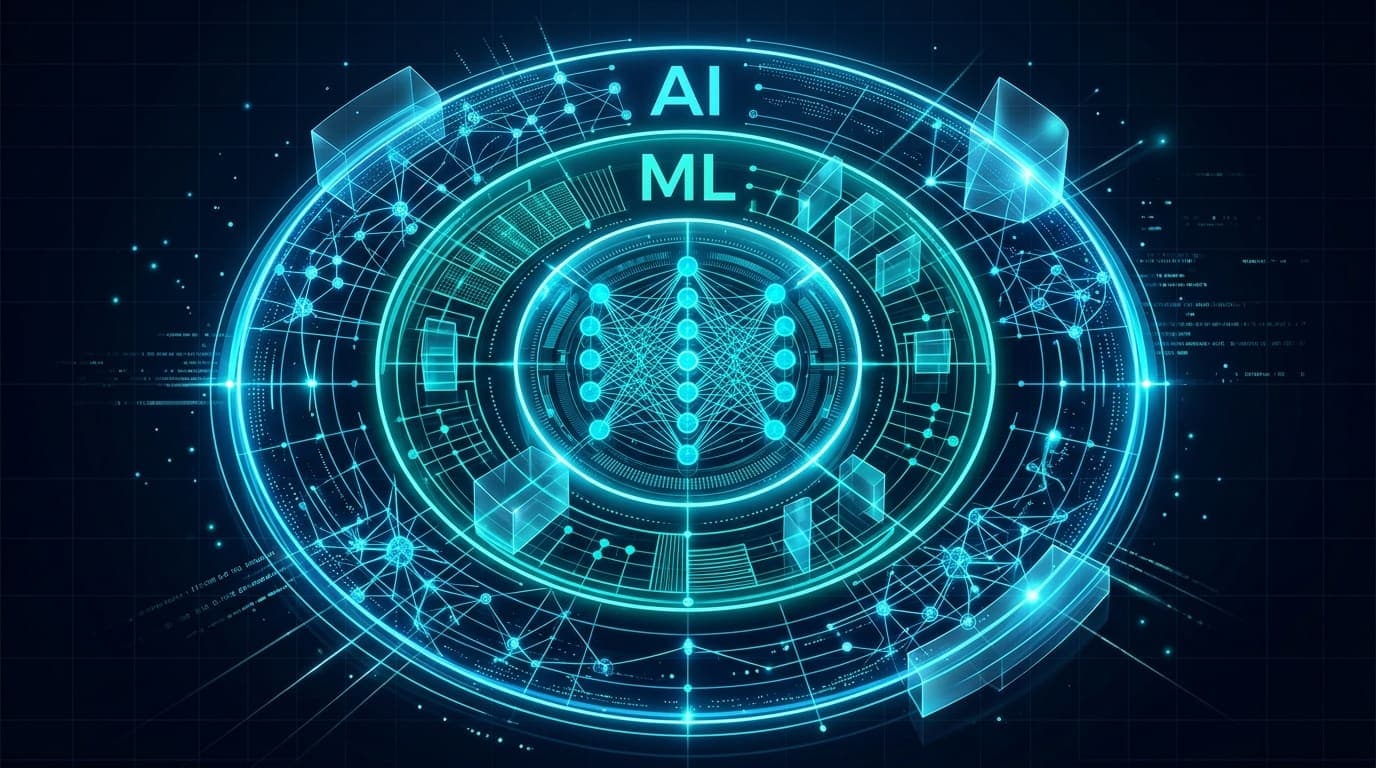
AI vs Machine Learning vs Deep Learning: What's the Difference?
A plain-English map of the terms everyone mixes up. No jargon, no maths — just a clear explanation of how these three ideas relate to each other.
Want to Deploy This Architecture in Your Business?
Talk directly to Anus Imran. We audit your operational friction and design custom autonomous AI systems, web apps, and data workflows tailored specifically for your team.
30 minutes · Direct engineer conversation · No sales pressure